What 250,000 3D printable miniaturesactually cost
Nobody in this hobby has a view of the whole market, including the people selling into it. So we counted.
We pulled together 247,482 listings from a major online marketplace for 3D printable models, covering 2,262 creators, each one with a price attached. Then we looked at what the numbers say about selling miniatures for a living.
Some of it confirmed what creators already suspect. One finding genuinely surprised us, and it is the one we would want to know if we were sculpting for a living.
Everything costs about six dollars
The median model costs $5.99. The mean is $9.24, pulled up by a small number of large bundles.
What stands out is how tight the range is. Only 10% of the catalogue costs more than $16.99. Only 1% costs more than $60. Meanwhile two thirds of everything sits under eight dollars.
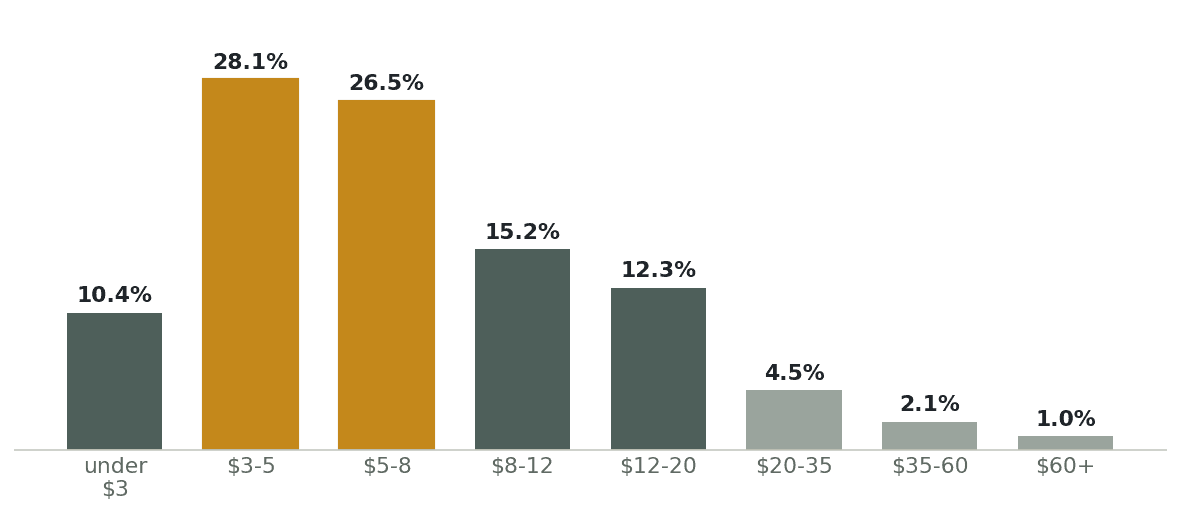
There is essentially no premium tier. A handful of campaign bundles and large collections sit at the top, but they are rare enough to barely register. The market has decided that a single miniature is a five to eight dollar object, and there is not much room above that.
For scale at the edges: the cheapest paid items we found were ten cent base clips. The most expensive listing was a $10,000 seller badge, which is obviously not a miniature at all.
A bigger catalogue does not let you charge more
This is the one that surprised us.
We grouped creators by how many models they have listed, then looked at the median price in each group. If building a large catalogue and a reputation gave you leverage, the biggest creators should charge the most.
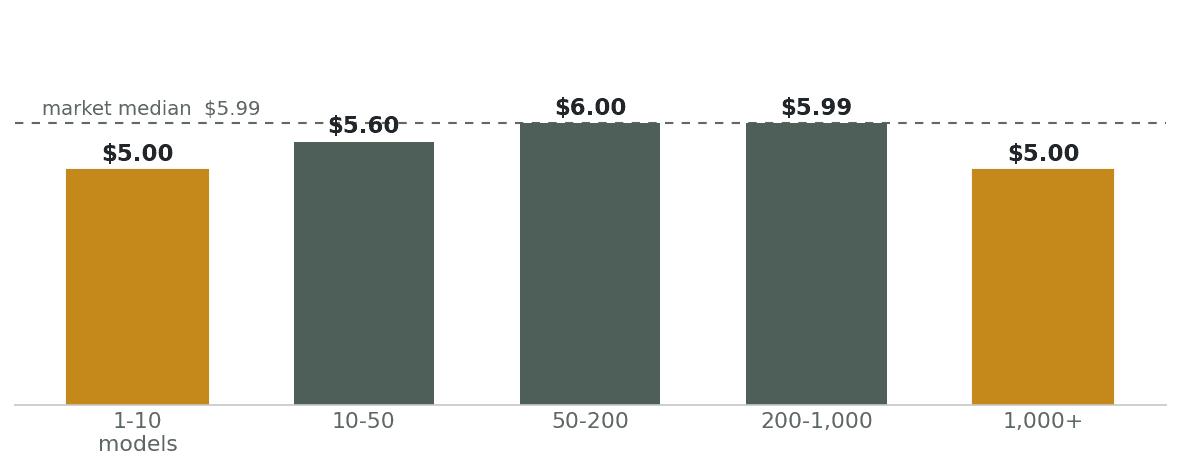
They do not. Creators with more than 1,000 models have a median price of $5.00. Creators with fewer than ten models are also at $5.00. The middle groups peak at $6.00 and come back down.
The biggest names in the market charge the same as someone who posted their first sculpt last month.
There are a few possible explanations. Large creators may run deliberately on volume. The market may have a ceiling nobody can break through regardless of reputation. Or creators may simply look at what everyone else charges and match it.
Whatever the cause, the practical version is this: scale here is a volume strategy, not a pricing one. Getting bigger means selling more units, not selling at a higher price.
Creators price like craftspeople, not shops
Half of every price in the catalogue ends in .00. A flat $5.00, $8.00, $15.00. Only about 23% use the $X.99 pricing that is standard almost everywhere else in retail.
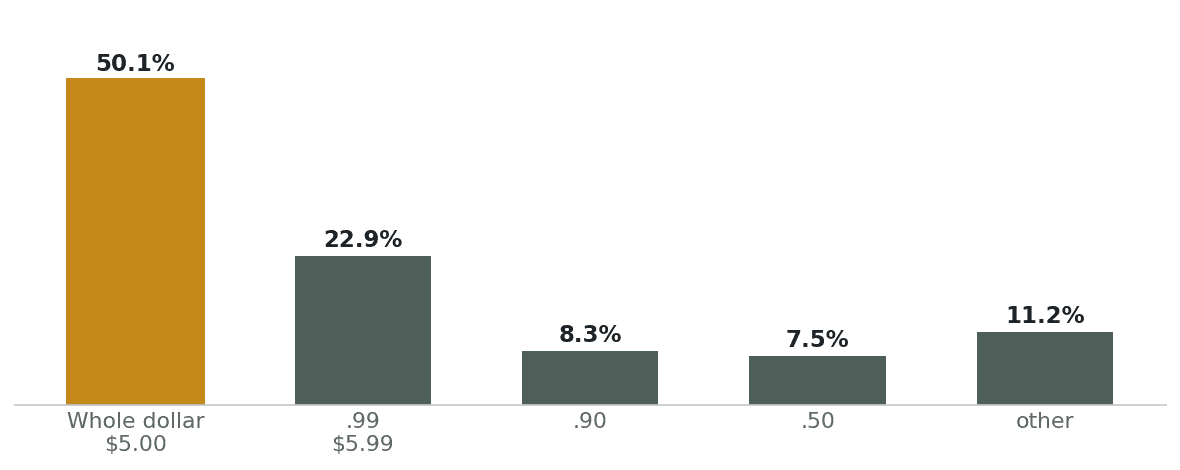
We think this says something real about who sells here. Retailers use $5.99 because decades of research says buyers round it down to five. Creators in this hobby mostly pick a number that feels fair and post it.
Whether that costs anyone money is an open question. We would like to see a creator run a proper test on it.
The market is more concentrated than it looks
There are 2,262 creators here, which sounds like a crowded, healthy market. The distribution says otherwise.
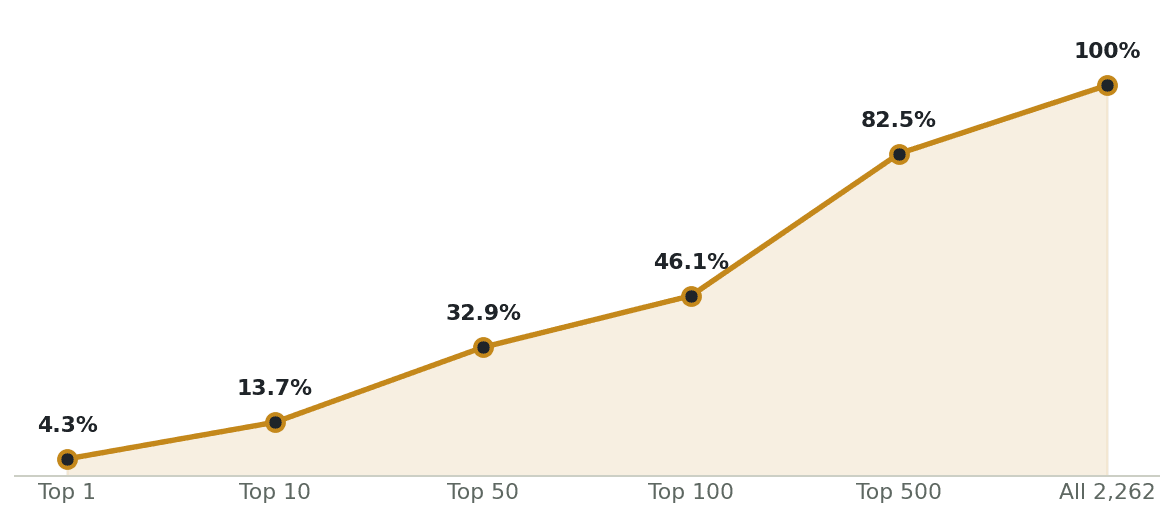
- The largest single creator holds 4.3% of the entire catalogue on its own.
- The top 10 creators hold 13.7%.
- The top 100 hold 46.1%.
- The top 500 hold 82.5%.
The median creator has 23 models listed. So the typical creator is nothing like these big studios. They have a couple of dozen sculpts and are competing for attention against operations releasing thousands.
Pre-supporting is unpaid work
About 8.5% of listings explicitly mention being pre-supported. Their median price is $5.59, against an overall median of $5.99.
Pre-supported files are cheaper than the catalogue average.
Adding supports is real work. It takes time and skill, and it is the single most common thing resin printers ask for. The market pays nothing for it, and if anything pays slightly less.
Our read is that pre-supporting has become table stakes rather than a feature, so creators do it to stay competitive rather than to charge more. That is a rough deal for the people doing the work.
Bundles are a steep discount
Roughly 9% of listings describe themselves as a bundle, set, pack, or collection. Those have a median price of $9.99, against $5.19 for everything else.
So a bundle costs about twice a single model. But bundles usually contain far more than two models. Many hold six, ten, twenty.
Bundling in this market is not a modest volume discount. It is a steep one. Creators are effectively saying that if you buy the whole set, most of it is close to free.
What people are actually making
Pulling the most common words out of 250,000 titles gives a fair picture of the hobby. Warrior appears 8,598 times, encounter 7,186, female 5,687, terrain 4,845, medieval 4,610, dragon 4,412.
Fantasy dominates. Goblins, dwarves, knights and dragons each appear thousands of times. Sci-fi is present but much smaller. Historical models and vehicles are a genuine niche at around 3% of the catalogue. NSFW content is about 1.2% of listings and it is cheap, with a median of $3.00.
Scale markers are rarer than we expected. Only 2.3% of listings mention 32mm and 1.6% mention 28mm. Most creators leave scale out of the title entirely, which seems like a missed opportunity given how often buyers ask about it.
If you sell here
Four things we would take from this as a creator.
Your price is set by the market, not by you
Five to eight dollars is where almost everything lives. Pricing meaningfully above that needs a different offer, not just a better sculpt.
Growth comes from volume and reach
The largest creators have not managed to charge more, so it is unlikely that you will either by getting bigger.
Bundle deliberately
Bundles are discounted hard. If you are giving away that much value, make sure you get something back, whether that is a larger average order or a customer who returns.
Put the scale in your title
Very few people do, and buyers search for it.
What this does not cover
This is one snapshot of one online marketplace, taken a few months ago. Prices change, and ours are frozen at the date we collected them.
It covers listings that appear on public store pages. Subscription and Tribes releases are underrepresented unless a creator later listed them individually, so newer drops are thinner here than older ones.
There are no free models in the dataset. This is a picture of the paid market only.
We also found clearly non-model listings in the data, such as seller badges and placeholder items. We left them in rather than quietly cleaning up the numbers.
If you are a creator and any of this contradicts what you see in your own sales, we would like to hear it. The point of publishing is to build a better picture of the market than any one person can see from inside it.
Every chart and the full method, as a PDF.